The Tuesday Night Supply Line: 1,800 Square Feet in Six Hours
Back to the homeowner near downtown Attica. When our crew arrived 52 minutes after her call, water had migrated under the kitchen island, through a transition strip, and into the dining room. We measured 14% moisture content in the oak flooring, which is high but workable. Category 1 clean water, IICRC S500 standard response. We pulled 38 gallons out with truck-mounted extraction in the first hour, set 11 air movers and two LGR dehumidifiers, and tented the dining room to concentrate airflow.
Three days later her hardwood was back to 8% moisture. No cupping, no replacement, total mitigation invoice around $3,400 with insurance covering everything past her deductible. If she had waited until morning to call, that same job would have cost three times as much and the floor would have been a loss. You can read more about that timeline in our guide on saving versus replacing hardwood after water damage.
One detail worth mentioning. The supply line itself was a braided stainless steel hose feeding her dishwasher, and it had been in service for roughly 12 years. The braided sleeve looked fine from the outside, but the internal rubber had degraded. We see this failure mode constantly. If your appliance hoses are older than a decade, replacing them on a Saturday morning costs about $25 each and prevents the exact scenario we just walked through.
The Finished Basement in Northwest Attica
Two summers ago we got a call from a family whose sump pump had quit during a thunderstorm. They came home from a weekend trip to two inches of standing water across 950 square feet of finished basement. Carpet, pad, drywall up to four inches, and an entertainment center sitting in a puddle. Category 2 water by the time we arrived, since it had been sitting for roughly 40 hours.
The decisions that saved them money:
- We extracted first, then removed pad (carpet was salvageable with hot water extraction and an antimicrobial).
- We flood-cut drywall at 16 inches instead of replacing full sheets, which kept their finished trim intact.
- We dried the wall cavities with injection systems instead of demolishing studs.
Total bill, $7,800. A full tear-out approach from a less careful company would have run $18,000 to $22,000 on that same basement. If sump issues sound familiar, our write-up on sump pump failures and basement flooding walks through prevention.
The homeowners also asked us about their belongings. The entertainment center was a loss, but we worked with a content cleaning partner to save roughly 80% of the photo albums, books, and electronics through pack-out and offsite drying. That side of the claim added about $2,100 and was fully covered. Most homeowners do not realize content restoration is a separate line item their policy almost always pays.
The Toilet Overflow at a Westside Office
Commercial jobs run on different math. A property manager called Attica Water Restoration on a Sunday morning because a second-floor restroom had overflowed Saturday afternoon and run unnoticed for hours. Category 3 water (sewage) had reached two suites below. We were on site within 90 minutes with PPE, biohazard containment, and a structural drying plan.
The tenants needed to operate Monday. We extracted, removed contaminated carpet and drywall, fogged with antimicrobial, and set 24 air movers with three dehumidifiers running on a generator we brought because the building's electrical panel could not handle the load. Both suites reopened Monday at 10am. The full cost ran $19,400, which the building's policy covered. Commercial response is its own discipline, and we cover the specifics on our commercial water restoration page.
What These Jobs Have in Common
Every one of them started with a phone call inside the first 24 hours. Every one used IICRC S500 drying standards. Every one had documented moisture readings at intake, daily monitoring, and a clear dry-out target before equipment came down. And every one had honest scope, meaning we never demolished what could be dried, and we never dried what should have been demolished.
You will notice we did not list times for hypothetical jobs. The reason is simple. Your water damage is not hypothetical. The drywall in your hallway is wet right now or it is not. The hardwood under your refrigerator is at 22% moisture or it is at 8%. Attica Water Restoration has been IICRC certified, BBB A+ rated, and operating across Attica since 2018, and our crews have walked into thousands of homes that looked exactly like yours does tonight.
What You Should Do in the Next Ten Minutes
Shut the water off at the main if you can find the valve. Move electronics and photos to a dry floor. Pull up area rugs. Do not run a household fan because it spreads moisture into walls you cannot see. Take photos of everything before you touch it, your insurance adjuster will want them. Then call a mitigation team. If we cannot help, we will tell you directly and point you to someone who can.
One last thing from the homeowner near downtown Attica. She told us afterward that the hardest part was not the water. It was the 90 seconds of standing in her kitchen wondering whether to call. Make the call. Equipment and drywall are replaceable. The window to save your floors and avoid mold remediation is not.
The Frozen Pipe in a Carmel Rental
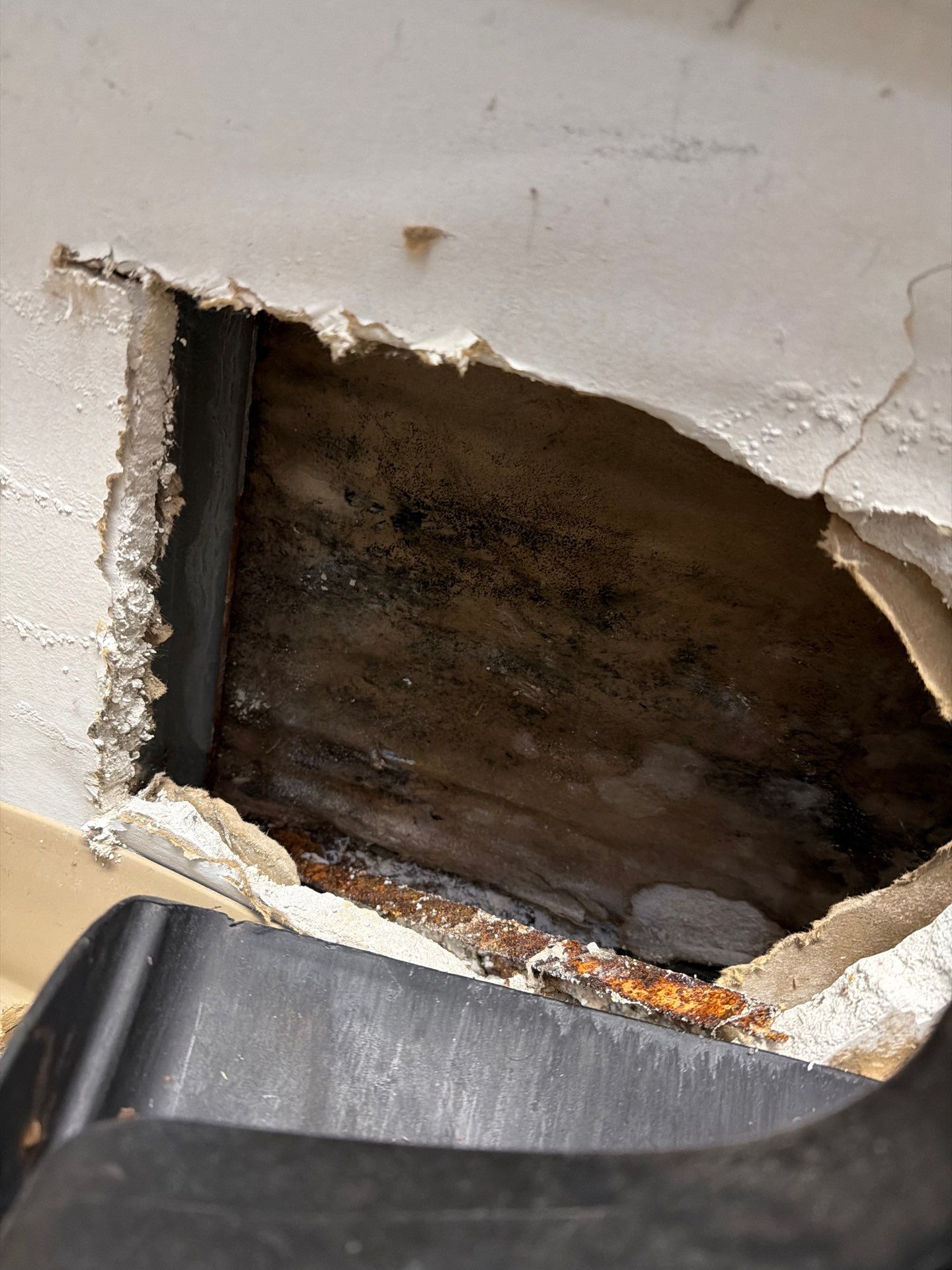
January, single-digit overnight lows. A landlord called about a vacant rental where a second-floor bathroom pipe had burst sometime during a four-day cold snap. Water had run for an estimated 18 to 30 hours before a neighbor noticed icicles forming on the soffit. When we walked in, the ceiling below the bathroom had collapsed onto a leather sofa, and water was still dripping from three light fixtures.
We turned the main off (it had been left on for a planned showing), extracted standing water from two floors, removed the failed ceiling drywall, and set 18 air movers across both levels. We documented every moisture reading, photographed the burst pipe location, and uploaded the file to his adjuster within 36 hours. The claim paid out at $24,600 for mitigation and reconstruction combined. He had his property re-rented six weeks later.