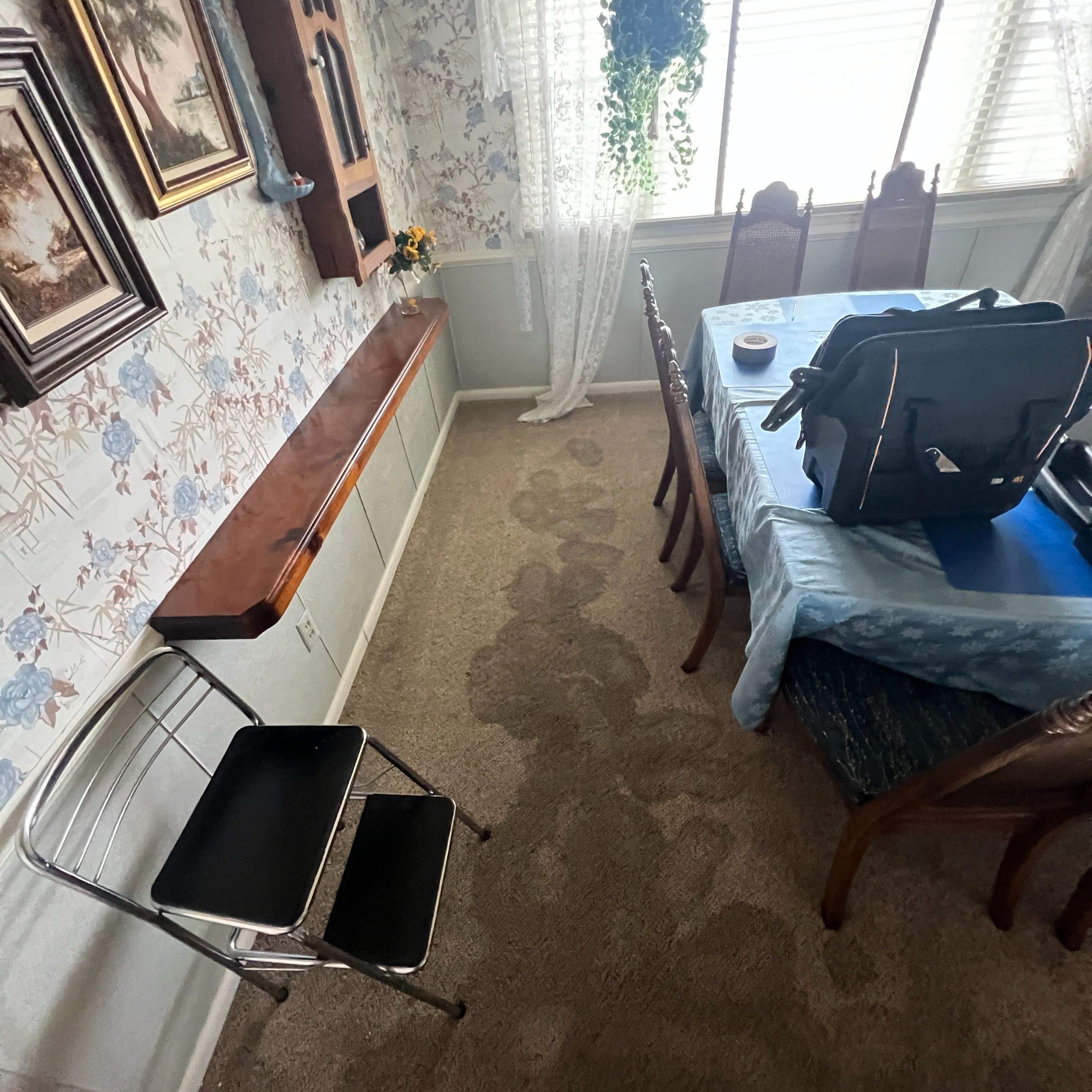
Why Storm Flooding Is Not Ordinary Water Damage
Before the comparison makes sense, you need to understand what is actually in the water on your floor. A burst supply line is Category 1, sanitary water that becomes a problem mainly through saturation and time. Storm intrusion is different. Once floodwater touches your subfloor, it is Category 3 by IICRC definition, meaning porous materials like carpet pad, drywall below the water line, particleboard, and insulation cannot be dried in place and reused. They have to come out. This is not a contractor upselling you. It is the S500 standard that every legitimate restoration company and most insurance adjusters in Attica work from.
The other variable is time. Mold colonization on wet cellulose materials begins between 24 and 48 hours after saturation at typical Indiana summer humidity. Structural wood can absorb water for 72 hours before warping becomes permanent. The decisions you make in the first day are the decisions that determine whether your repair bill lives in the four-figure range or the five-figure range. With that framework, here is how the realistic response options actually compare for a typical Attica storm flooding event of 1,000 to 1,500 square feet of affected area.
The Four Paths After a Storm Flood
Most homeowners are weighing some version of these four approaches. The table below maps what each path actually delivers, where it breaks down, and the realistic financial picture in central Indiana.
| Response Path | Typical Cost Range | Time to Dry | Mold Risk | Insurance Outcome | Best Fit Scenario |
|---|---|---|---|---|---|
| DIY shop vac and box fans | $150 to $400 in rentals and supplies | 7 to 14 days, often incomplete | High. Hidden moisture in wall cavities and under flooring rarely dries | Claim often denied or reduced because mitigation was not documented to industry standard | Less than 100 sq ft of clean water, no porous materials affected, no subfloor saturation |
| General handyman or cleaning service | $1,200 to $3,500 | 5 to 9 days | Moderate to high. Most lack moisture meters, thermal imaging, and antimicrobial protocols for Category 3 | Adjusters frequently request rework when documentation does not meet S500 | Cosmetic cleanup only after a certified firm has already handled mitigation |
| IICRC certified restoration with full mitigation | $3,500 to $9,500 for typical residential storm loss | 3 to 5 days to dry standard | Low. Moisture mapping, controlled demolition, antimicrobial treatment, and daily monitoring | Direct insurance billing, Xactimate estimates, moisture logs, and photo documentation that adjusters accept | Any Category 3 intrusion, any affected drywall or flooring, any basement flooding event |
| Full reconstruction without proper drying first | $8,000 to $25,000, often with rework | Drying skipped, problems surface in 30 to 90 days | Very high. Sealing moisture inside new assemblies guarantees mold | Second claims for mold often denied as a consequence of improper mitigation | Almost never appropriate as a first response |
Reading the Comparison Honestly
The numbers tell a story that most Attica homeowners do not hear until they are already deep into a bad outcome. The DIY path looks cheap and sometimes is, but only for the narrow scenario at the top of that row. Once storm water has touched carpet pad or wicked six inches up a drywall sheet, shop vacs and box fans cannot pull moisture out of the wall cavity. You will feel the floor dry to the touch and assume the job is done, while the bottom plate of your framing sits at 28 percent moisture content for two weeks. That is the call we get in late summer, when the smell starts. By then, the cost of remediation has often tripled because mold has migrated from the bottom plate up into stud bays, insulation has to be removed and replaced, and any flooring installed over the wet subfloor has to come back up.
The handyman path fails for a different reason. The work itself may be competent, but without the documentation chain that adjusters expect, your insurance company has no basis to pay a claim at the level the damage actually warrants. We have walked into homes where a homeowner spent $2,800 on cleanup and recovered $900 from insurance because no one logged moisture readings or photographed the affected materials before removal. A proper water damage restoration response builds the evidence file as the work happens, not after. That file typically includes initial and daily moisture readings on every affected material, psychrometric logs of the drying environment, photos of demolition scope, and an itemized Xactimate estimate that uses the same line-item pricing your carrier uses internally. Without those pieces, adjusters have wide discretion to reduce a payout.
The third row is what most storm losses actually require, and it is where Attica Water Restoration operates. Our process on a Attica storm call starts with moisture mapping the full affected area, identifying Category 3 materials for controlled removal, and setting commercial air movers and dehumidifiers calibrated to the actual square footage and humidity load. We monitor daily, log readings the adjuster will see, and only call drying complete when materials hit dry standard. For basement events specifically, our flooded basement cleanup process handles the sump and perimeter drainage realities unique to Indiana clay soil. And when the water came in through a damaged roof or siding rather than ground intrusion, our storm damage team coordinates the envelope repair so cleanup is not undone by the next rain.
The fourth row exists because some contractors will quote reconstruction without insisting on proper mitigation. Decline that offer every time. Sealing wet framing inside new drywall is how a $6,000 loss becomes a $22,000 loss eighteen months later.
What the First 24 Hours Should Look Like
The window for keeping a storm loss in the third row of that table is short. In the first hour, shut off power to affected circuits at the panel and document the standing water with timestamped photos before anything moves. In the first six hours, contact your insurer to open a claim and call a certified restoration firm so extraction can begin. In the first 24 hours, all standing water should be removed, Category 3 porous materials cut out to a measured line above the water mark, and air movers staged against framing cavities. If those three milestones happen on schedule, the rest of the job follows the predictable cost and timeline shown in row three. Miss them, and the numbers drift toward row four regardless of who you hire next.